

Can a Painting Help Heal a Relationship?
There are paintings that tell a story, and there are paintings that ask us to look at our own lives.
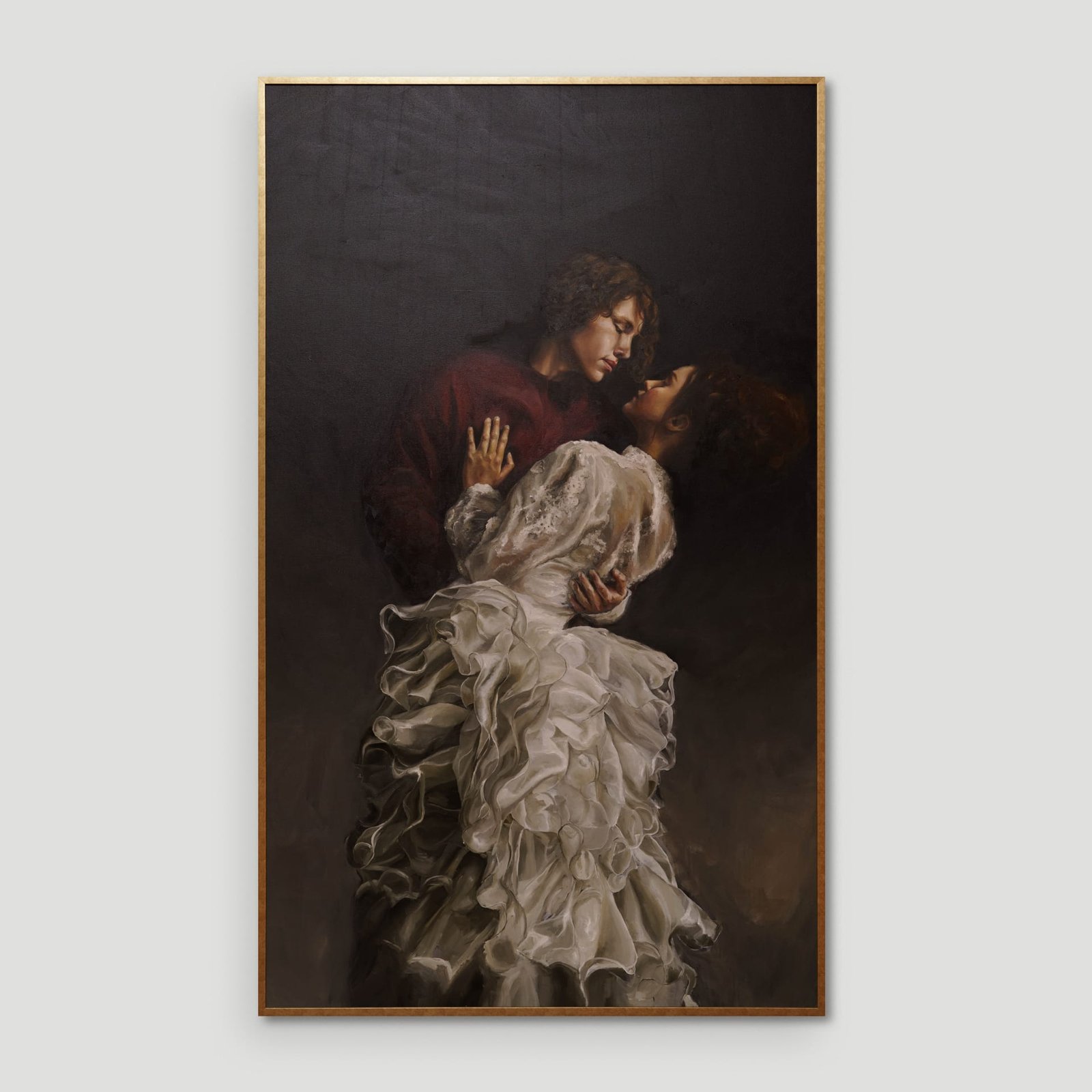
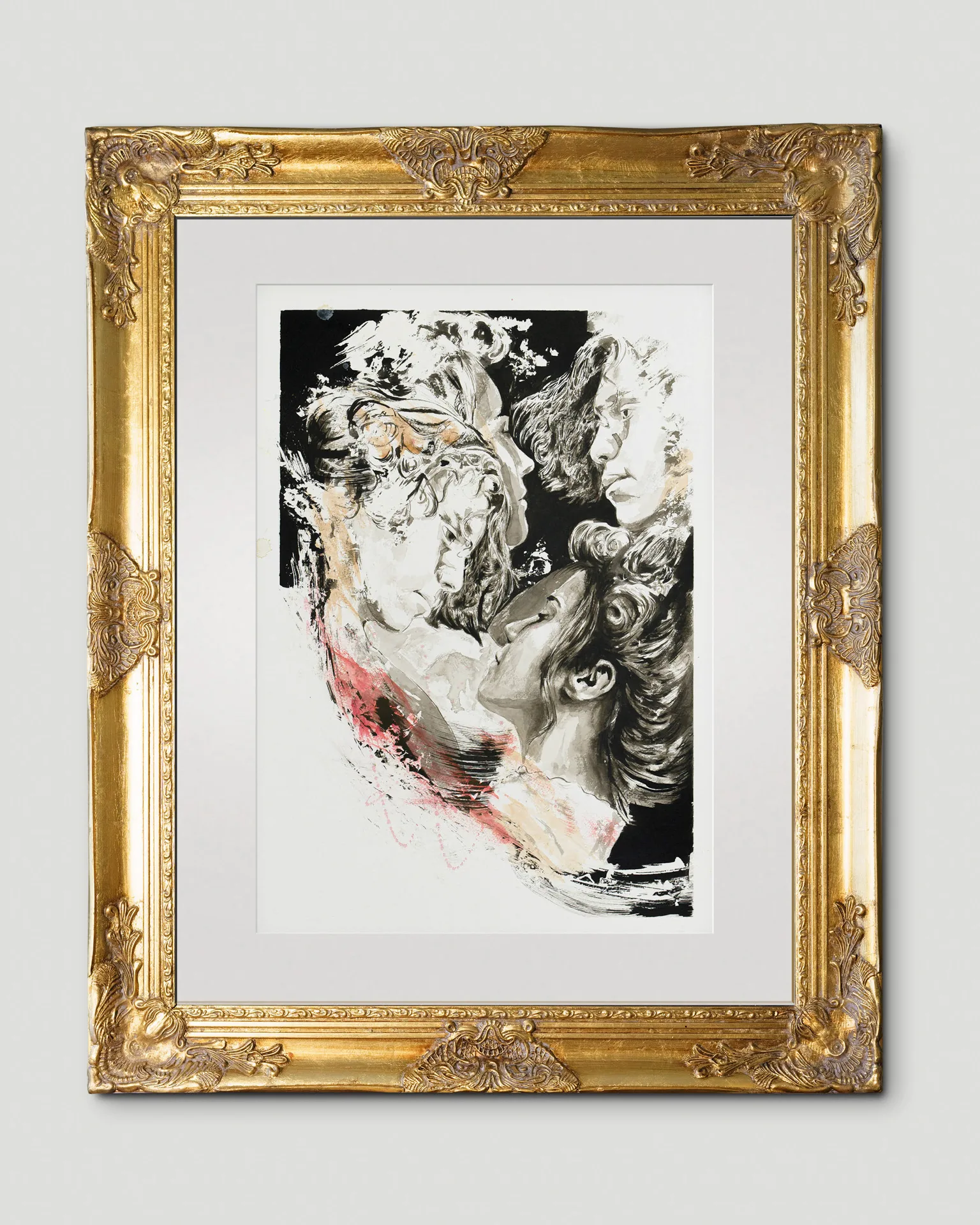
Polaris, one of the central works in Alex Righetto’s Romeo and Juliet: The Metamorphosis collection, belongs to the second kind.
What is Romeo & Juliet: The Metamorphosis
“Romeo and Juliet: The Metamorphosis” is a multimedia art project that reinterprets the story of Romeo and Juliet through a contemporary narrative, bringing together painting, cinema, storytelling, and digital media.
The project explores the relationship between technology, communication, and human connection, examining how contemporary society shapes the way we relate to one another. At the heart of the story is the individual’s journey of transformation: a passage from selfishness and isolation toward awareness, empathy, and a deeper understanding of others.
Through this journey, Shakespeare’s tragedy becomes a starting point for a reflection on the present and on the possibility of transforming personal crisis into an opportunity for rebirth.
Polaris: At the Heart of the Collection
At first glance, the painting appears deeply romantic, perhaps even idealized. It presents an image of love that may seem almost too perfect, and perhaps even a little stereotypical.
When people enter a relationship, they often create an image in their minds of what that relationship could become. They imagine how they will look at one another, how they will care for each other, and who they hope to become together.
The difficult part comes later.
As time passes, everyday life takes over. Responsibilities grow. Difficulties arise. Communication can become more complicated. And, sometimes, the way two people look at each other begins to change.
The question then becomes: how difficult is it to preserve that original vision?
How difficult is it to remember the relationship one wanted to build, even when reality becomes more complicated?
For Righetto, this is precisely what Polaris represents.
The painting is an invitation to remember what a relationship can be. Perhaps the image is idealistic. Perhaps it is even impossible to reach completely.
But an ideal does not necessarily have to be reached in order to have meaning.
It can simply serve as a point of reference.
Something that can be recreated every day. Something that must be recreated every day. Something that must continue to be imagined.This is the reason for the painting’s title: Polaris, the North Star.
For centuries, sailors looked to the North Star to orient themselves when they were surrounded by darkness and had no instruments to guide them.
Polaris did not necessarily tell them their destination.
It gave them a direction.
In the same way, Righetto sees Polaris as a reference point for a couple: something to look toward when they lose their way, something to remember when things become difficult, and an image of the relationship they want to continue building together.
Perhaps art cannot heal a relationship by itself.
But it can remind two people of something they may have forgotten.
It can give them an image of what they once imagined, and perhaps inspire them to recreate it again.
Every day.
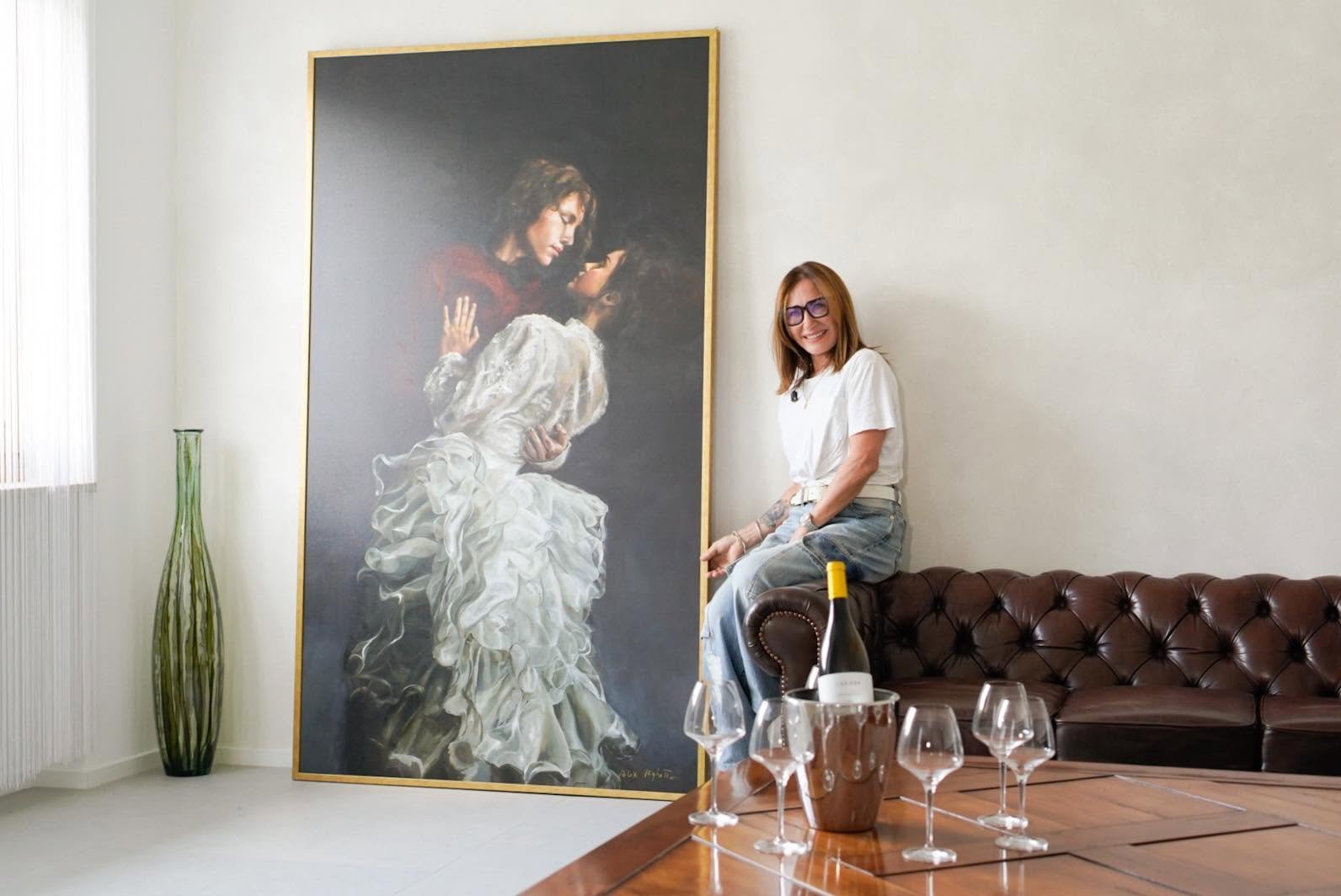
A limited edition print of this painting is now available.
The original artwork is not available, but this limited edition is produced at full scale and presented in the original frame, with a unique, hand-painted intervention created specifically for each piece.
For information and availability, please send me a private message.

Romeo and Juliet in the Age of Disconnection [Video]
This video introduces the collection and provides a brief overview of the project, its concept, and the reasons behind its creation. Since the artist, Alex Righetto, is Italian, the video is presented in his native language.
Please turn on the subtitles in your preferred language.
The video is designed as a short introduction, giving viewers the essential context they need to quickly understand the project and enter into the collection.
The central theme of the project is the sense of disconnection in a digital world where everything seems more connected than ever, yet we often feel increasingly isolated and less able to truly connect with one another.
The project does not seek to blame or condemn technology. Instead, it uses art as a way to question and explore our relationship with technology, communication, and one another.
Through the paintings and the collection as a whole, the project invites viewers to observe, reflect, and consider how our increasingly digital lives may be affecting the way we experience human connection.
The video offers a brief introduction to these ideas and provides an entry point into the collection. More context and insights into the project are available throughout the website.
In this introduction, Alex explores how Romeo and Juliet can be understood as one of the most powerful metaphors for human incommunicability, and how the inability to truly communicate can affect our relationships.
The project uses Shakespeare’s timeless story as a starting point for a broader conversation about human connection in the digital age. It does not seek to blame technology, but rather to question how it is shaping the way we communicate, relate to one another, and experience intimacy.
Through the paintings, exhibitions, and the wider artistic project, Alex invites the viewer to observe and reflect on these questions.
The video opens the door to this conversation, providing the natural context in which the artworks and exhibitions can be understood. More context and insights into the project are available throughout the website.
What does connection mean to you in a world where we are more connected than ever?
Watch the video, explore the collection, and join the conversation.
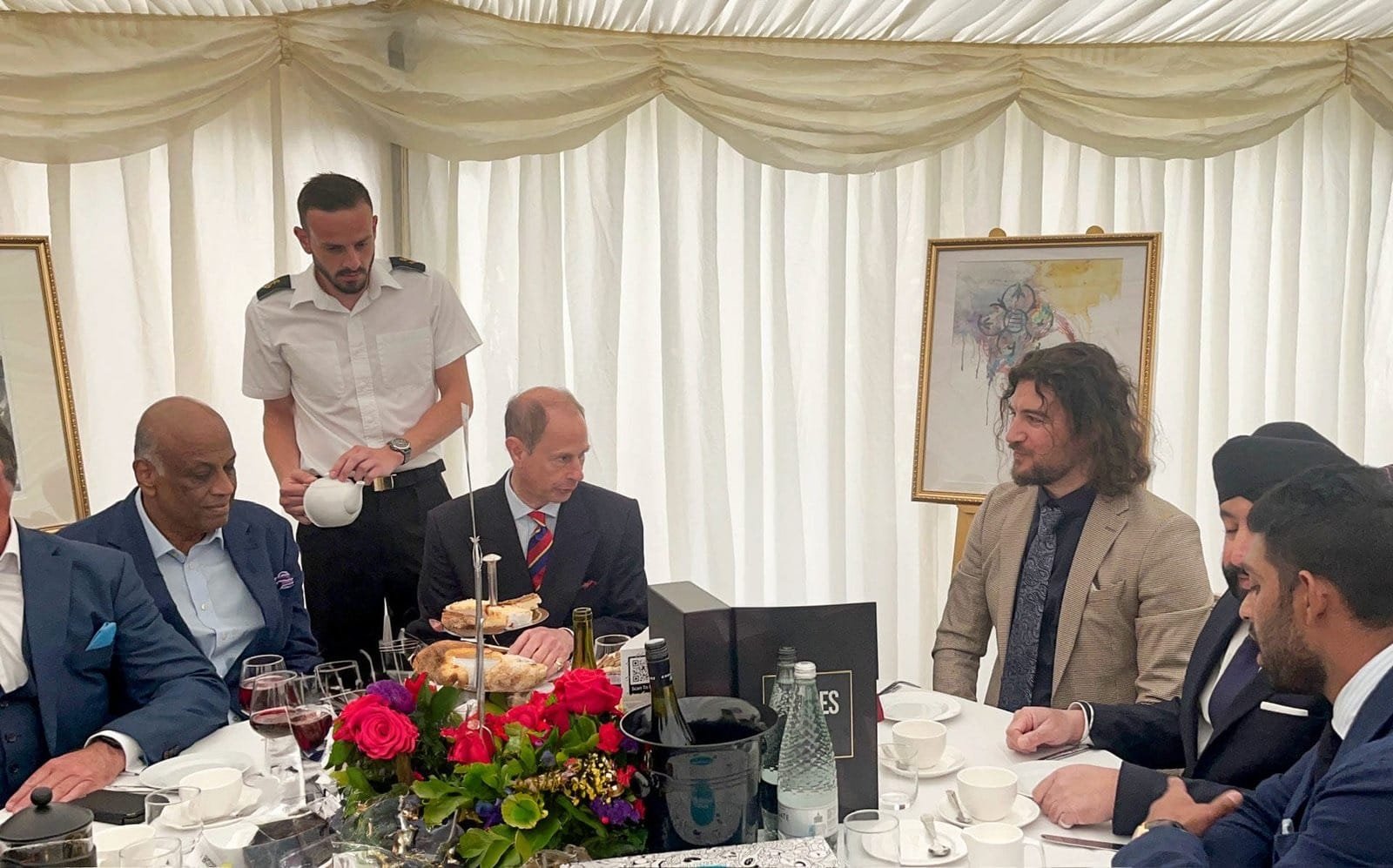
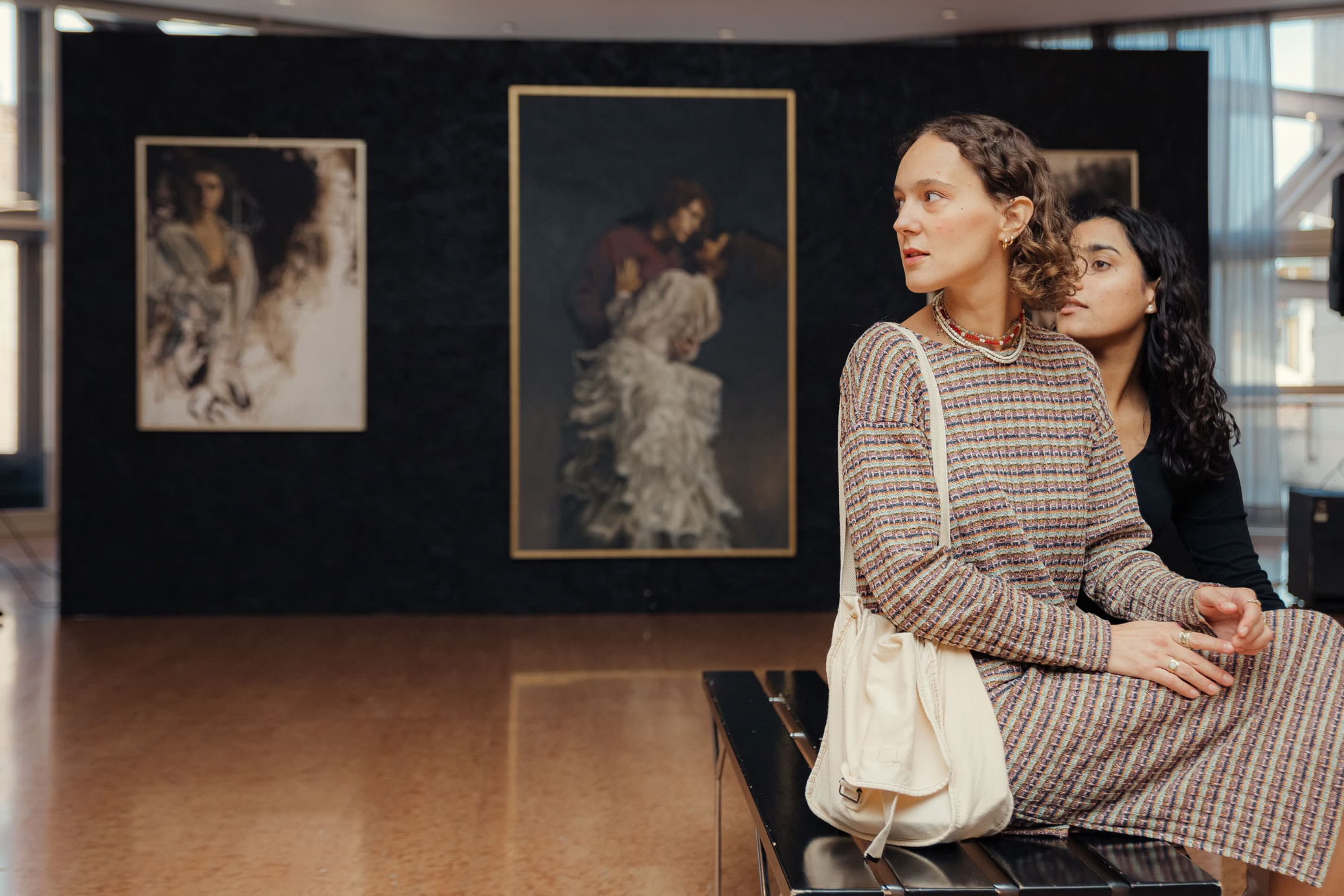
Romeo and Juliet: The Metamorphosis was exhibited at Windsor Castle.
A major milestone for the “Romeo and Juliet: The Metamorphosis” collection has finally been achieved.
My collection, inspired by the Shakespearean classic, was exhibited in front of the British royal family. And no, this isn’t clickbait: it really happened. It was an emotional moment that added even more value to the collection and my artistic career.

The Concept Behind the Collection
“Romeo and Juliet: The Metamorphosis” is a contemporary and innovative reinterpretation of the Shakespearean classic. The collection explores love, transformation, and duality themes, using a blend of traditional and modern techniques. I wanted to create a dialogue between the past and the present, showing how the emotions and conflicts of an ancient story can still resonate in our contemporary world. My works offer a unique vision of the characters and iconic scenes, infusing new meanings and perspectives into the tragic love story.

Highlights of the Collection
One of the main pieces in the collection is “The Balcony Scene: The Essence of Love Defined.” This piece captures the iconic moment when Romeo and Juliet declare their eternal love. I aimed to represent the purity and intensity of their emotions through a combination of vibrant colors and innovative painting techniques.
Public Reactions
The reactions from the audience at the event were incredible. Many people spent a long time admiring the pieces, captivated by the details and emotional depth. I noticed that many visitors scanned the QR code for more information, showing a genuine and deep interest in my work.
I had the chance to speak with the Governor of Windsor Castle, who was very pleased with my work. His approval added another layer of satisfaction to the day.

Pre-Event Preparations
Preparing for the event was quite a journey. The artworks were in the United States, so transporting them to the UK and reframing them posed significant challenges. However, seeing everything perfectly set up at Windsor Castle made all the effort worthwhile. An interesting detail is that due to high security protocols at the castle, the company providing the exhibition panels was not permitted on the castle grounds. This created a logistical challenge for displaying the artworks. In a unique solution, the Royal military stepped in and constructed the panels on my behalf.
I chose Windsor Castle because I wanted to do something big that would create an impact. Shakespeare was from London, so I wanted to create a connection with the UK and the royal family. Windsor Castle, with its history and grandeur, was the perfect location for this event.

Meeting Prince Edward
One of the most exciting moments was meeting His Royal Highness Prince Edward. On Saturday, July 8, 2024, we sat down together at the castle, sipping tea and discussing politics and art. Edward was extremely curious about the details, being a culture enthusiast. He asked where I was from and if I was residing in the UK. It was an honor to discuss the inspirations and ideas behind my works with him.
To celebrate the occasion, the field in front of the castle was transformed into a dreamlike scene with a military parade. This event honored the presence of Prince Edward, King Charles III’s brother, adding a touch of majesty to an already unforgettable day. The parade included the Royal Guard in traditional uniform, and seeing it live was simply breathtaking.

Behind the Scenes
The event’s organization saw contributions from many key people, including the Oppo Foundation, Stacy Francis, Jamie Baulch, Cheryl Hicks (Jamie’s wife), and Melissa Farry. Their support and dedication were crucial to the success of the exhibition. The day was filled with tension and emotion, especially due to intermittent rain, which made organizing quite challenging.

Introduction to the Romeo and Juliet: the metamorphosis project
It’s the late 1960s, almost the ’70s.
They’ll call it The Summer of Love.
That year will be something special, something unforgettable. The young people of the time don’t know it yet, but it will go down in history as a unique, extraordinary moment.
A rebellious spirit, a sense of youthful triumph, and the realization that things can actually change are in the air. Everyone feels it.
Long hair, loose clothing, and a scruffy look become their badge of identity. Some smile at this transformation, while their parents despair.
The system, the machine, isn’t invincible.

Rebellion is possible.
This becomes clear as the media brings these stories to light.
Millions of people spontaneously gather in San Francisco.
It’s been twenty years since Jack Kerouac’s On the Road, and the time is ripe.
It’s the year of the Summer of Love.
In the summer of 1967, between 75,000 and 100,000 young Americans flooded into Haight-Ashbury to protest the Vietnam War and materialism, to experiment with drugs and sexuality, to explore alternative religions, or simply to seek and live out the hippies’ idealized version of enlightenment.
Nobody wants war anymore. Consumerism and conservatism make people cringe.
The radio plays San Francisco (Be Sure to Wear Flowers in Your Hair).
The echoes of voices shouting, of eyes turned skyward as they dance, impatiently awaiting the future…
All of it slowly fades into a distant, nostalgic hum.
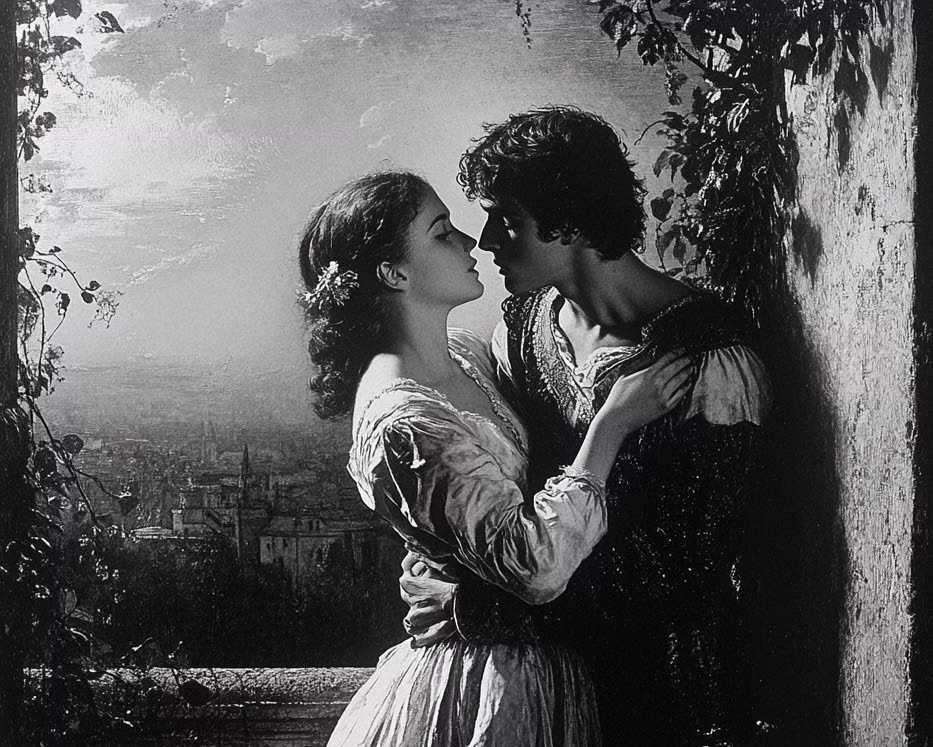
Another story from 1500
Now, let’s go back a few hundred years to Verona, where Romeo and Juliet lived.
A different time. Same struggle. Two young lovers rebelling against conflicts and feuds that aren’t their own.
True love, overshadowed by the ambitions and desires of adults, is pursued in secret.
They, too, in their youthful rebellion, find a way to live life on their own terms, defying the expectations imposed by society.
But in their quest, they ultimately face a fate far harsher than anything life itself might have held for them.
The challenge to rules, the rejection of the present’s limitations, the generational clash, and the search for a better future—these themes are strikingly familiar.

Back to the present time
Now fast-forward to the present. Look around at a subway car.
People travel alone, eyes down, avoiding each other.
No one speaks. They’re absorbed in their electronic devices, on journeys filled with images and videos from social media.
A world where people compete for popularity to earn as much as they can from major corporations, who in turn pay them to promote their products.
Social media no longer allows for free expression. Instead, it’s monitored by artificial intelligence, isolating or banning anyone who strays from the “correct” narrative.
What happened to us? What happened to the rebellious spirit that has now morphed into conformity?
Why have we become the loneliest generation?
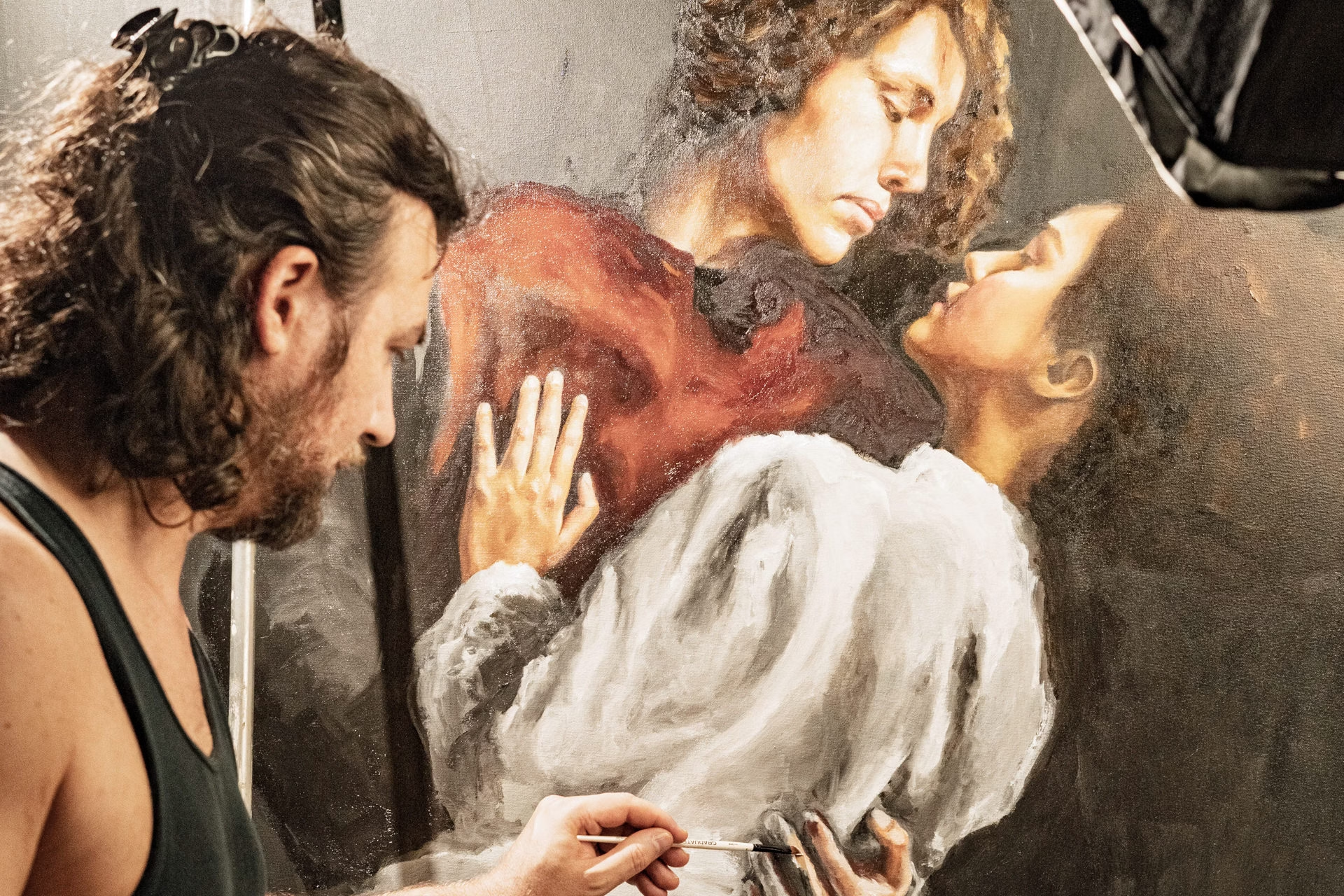
An art collection is born
The Metamorphosis of Romeo and Juliet is an art collection that, under the guise of retelling the world’s most famous love story, explores loneliness and the lack of authentic connections in the age of technology and artificial intelligence.
It’s a narrative journey inspired by the story of these two lovers, offering an alternative ending: a vision where they must survive their own struggles to build a lasting relationship.
It’s an emotional exploration of the past and the future, weaving together themes like relationships, selfishness, empathy, and emerging technologies.
The project began in 2021 and is still evolving. It’s been exhibited in Miami, London, and Verona, and seen by tens of thousands of people—including the brother of the King of England. It’s also sparked school workshops and in-depth seminars.
This collection’s story is far from finished, but it holds incredible promise.
The goal is to once again ignite a desire for change and a sense of freedom in future generations.
This time not as revolution but perhaps as evolution.